
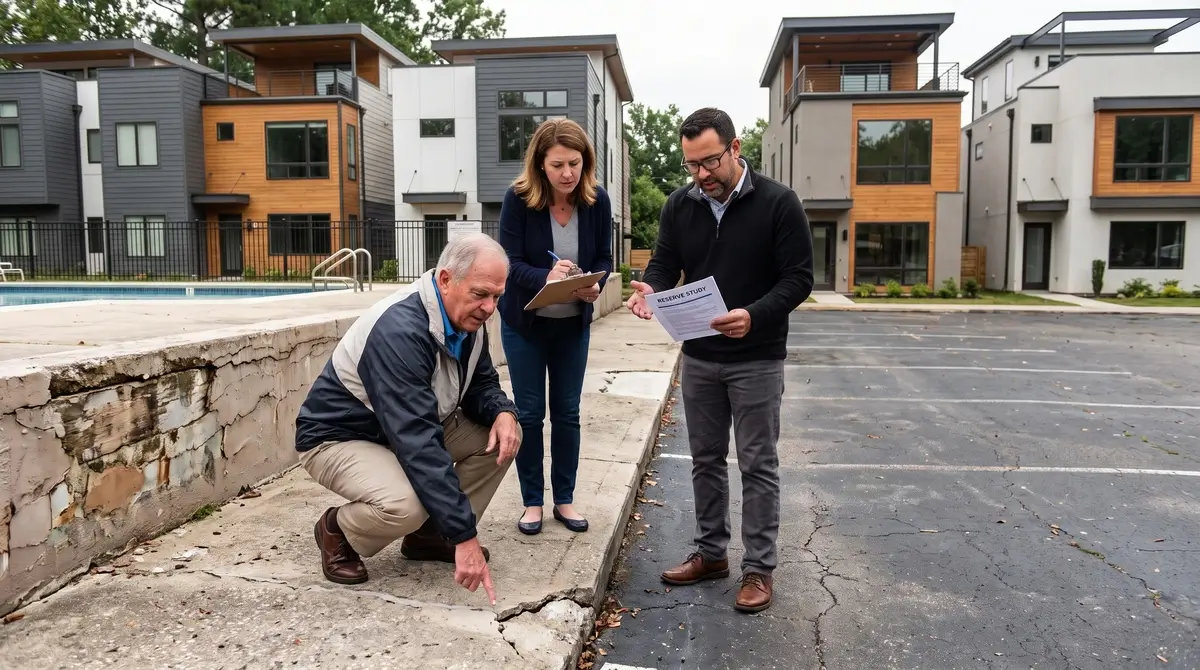
A cracked retaining wall behind a Lebanon clubhouse doesn’t send a warning text before it gives way, and a failing stormwater line underneath a shared driveway usually stays invisible until the pavement starts to sink. Boards budget around the problems they can see and get surprised by the ones working away underground or behind a building’s siding. Our piece on too many decisions competing for attention describes how this kind of surprise lands hardest on boards already juggling a dozen smaller responsibilities.
This article covers what’s driving reserve shortfalls in Lebanon associations and the steps a board can take before a repair bill forces an unplanned vote.
Key Takeaways
- Reserve studies written years back rarely track how quickly Lebanon’s aging shared infrastructure actually deteriorates.
- Southwest Ohio’s growing demand for contractors has made repair timelines and pricing harder to predict.
- A repair deferred across multiple budget cycles tends to come back far costlier than the original estimate.
- Owners accept assessments more readily when boards share financial detail consistently rather than only after a crisis.
- A board’s past approach to rule enforcement often shapes how residents respond to a new financial request.
How Reserve Studies Fall Behind What Lebanon Communities Actually Need
A reserve study captures the cost assumptions in place the year it gets written, and those assumptions age out quickly once labor rates, material costs, and contractor availability shift around it. A retaining wall repair priced three years ago at a modest figure can run considerably higher today, leaving a board that trusted the older number underprepared once bids come back.
A few local factors widen this gap specifically in the Lebanon area:
- Licensed contractors for structural, drainage, and roofing work stay booked out across southwest Ohio, which extends timelines and raises rates.
- Material costs for concrete, roofing, and piping climb every budget cycle, regardless of whether a specific project is underway.
- Insurance premiums on shared structures renew higher most years, shaped by regional claims trends and rebuilding costs.
- Dues set three or four years ago stay flat while actual repair math continues moving upward.
Homeowners regularly ask why dues keep climbing without a visible project in progress, and the honest answer traces back to this growing distance between the study and current market conditions.
What Happened When One Lebanon Community Delayed a Known Repair
A mid-size Lebanon association shows clearly what unfolds once a flagged issue sits untouched for too long.
Two Budget Cycles of Overlooked Warnings
The community’s reserve study identified a deteriorating retaining wall behind the clubhouse two years running. The board held off both times, concerned that homeowners already adjusting to rising property taxes wouldn’t welcome another increase layered on top. The board secretary at the time later admitted she didn’t feel confident reopening that discussion so soon after the previous budget meeting had turned contentious.
The Repair That Followed
Heavy spring rain pushed water against the weakened wall until a section gave way, undermining part of the parking area above it. The emergency repair cost considerably more than a planned reinforcement project would have run a year earlier, and the board had no remaining option besides a special assessment due within thirty days. The median special assessment reached $1,100 per door in 2025, and communities facing structural repairs on that scale often land above that figure once emergency contractor pricing gets factored in.
Reporting Practices That Make an Assessment Easier to Accept
Boards build trust through steady, itemized reporting rather than a single explanation delivered after a problem has already escalated. Our discussion of financial reviews stirring tough meetings covers a related point worth repeating here. Accurate numbers alone rarely settle disagreement on their own, since timing and clarity carry their own weight.
A handful of warning signs tend to appear before a funding gap turns into a surprise bill:
- Monthly financial statements arrive late or get skipped for a cycle or two.
- Reserve balances get mentioned verbally at meetings but never show up in writing.
- Vendor invoices appear that weren’t part of any earlier budget discussion.
- Homeowners keep asking the same financial questions because the numbers were never explained clearly the first time around.
Insurance pressure shows up elsewhere in similar ways. Florida homeowners now pay an average of $2,691 a year for property coverage, a figure that’s climbed nearly 50 percent since 2020. Every region carries its own cost pressures, but reserves absorb that strain in comparable ways no matter where a community sits.
How Enforcement History Colors a Board’s Next Financial Request
Special assessments meet the strongest resistance in communities where homeowners already feel shut out of board decisions. Our look at HOA policies reaching a breaking point touches on a dynamic that resurfaces here as well.
That friction tends to follow a familiar shape. Residents question the math even when the figures check out, meeting attendance spikes, and conversations grow tense quickly. Unrelated disputes over fences or parking from months earlier resurface during the vote, almost as if they’d been waiting for an opening. A homeowner who already feels unheard rarely extends patience to a large bill, and she’ll typically say so at the next meeting in front of the whole room.
Practical Steps Lebanon Boards Can Take Before a Vote
How a board prepares before a vote usually matters more than the final dollar figure attached to it. Our guide on maintenance plans stalling without agreement covers the groundwork that makes this step easier to manage.
A short list of moves can reduce both the size of an assessment and the pushback that follows:
- Pull the current reserve study and compare it line by line against actual account balances instead of relying on memory.
- Request updated contractor bids rather than leaning on pricing carried over from a few years back.
- Review delinquency rates closely, since unpaid dues often widen a shortfall further than the board expects.
- Share the full reasoning with homeowners well before the vote takes place, not after the notice gets mailed.
- Schedule routine structural inspection walkthroughs so small issues with walls, drainage, and roofing get caught while they’re still inexpensive to fix.
Boards can also lean on resources built specifically for association leadership guidance to weigh their options before a vote locks anything into place.
FAQs about HOA Special Assessments in Lebanon, OH
What’s the difference between a special assessment and a regular dues increase?
A dues increase funds ongoing operations and planned reserve contributions, while a special assessment covers an unplanned or underfunded expense, usually tied to a specific repair that can’t wait for the next budget cycle.
Who decides whether a Lebanon HOA needs a special assessment instead of a loan?
The board typically weighs both options, considering interest costs, approval requirements, and how quickly funds are needed, then presents its recommendation to homeowners along with the reasoning behind it.
What documentation should a board keep when levying a special assessment?
Boards should retain the reserve study, contractor bids, meeting minutes showing the vote, and written notices sent to homeowners, since these records matter if questions or disputes come up later.
Can a reserve study actually prevent every special assessment?
Not entirely, since storms, code changes, and material shortages can still create unplanned costs, but a current study catches far more issues early than one left unreviewed for several years.
How should a board communicate a special assessment to homeowners who are struggling financially?
Offer a clear breakdown of the cost and reasoning, mention any installment options available under the governing documents, and give homeowners a direct contact for questions before the payment deadline.
Why Lebanon Boards Benefit From Checking Reserves Year-Round
A retaining wall rarely fails in isolation, and the boards caught off guard by one almost always trace the surprise back to a reserve study nobody revisited in time. PMI Buckeye Services spends its days inside these conversations with Lebanon associations, matching what boards see on paper against what’s actually happening underground and behind the walls. Schedule a reserve fund consultation with our team so your next budget cycle reflects real numbers instead of outdated assumptions.
